The Real Truth: Sony Fe 50 150Mm F2 Gm or Fujifilm Instax Mini 41?
Introduction
When choosing camera gear, shoppers often face choices that are not just about specs but about intentions. The Sony Fe 50 150Mm F2 Gm and the Fujifilm Instax Mini 41 represent two ends of the photographic spectrum: one is a professional-grade, full-frame tele zoom designed for image control and low-light performance; the other is a pocket-friendly instant camera built for tactile, shareable prints and spontaneous moments. This article evaluates both products in real-world terms—what they do best, who benefits most from each, what buyers typically worry about, and how to decide between them. The goal is to give an honest, practical comparison that reflects real shooting scenarios rather than marketing hype.
Sony Fe 50 150Mm F2 Gm — Detailed Analysis
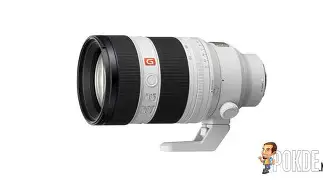
The Sony Fe 50 150Mm F2 Gm is positioned as a high-performance telephoto zoom in Sony’s premium G Master lineup. It is designed for photographers who demand fast apertures across a flexible focal range, exceptional sharpness, and professional autofocus behavior. In practice, this kind of lens is aimed at those shooting sports, events, wildlife, editorial portraits, and low-light assignments where both subject separation and the ability to freeze motion are priorities.
Optical and Mechanical Characteristics
As a G Master lens, the emphasis is on resolving power, contrast, and pleasing out-of-focus rendering. The constant wide aperture across the zoom range provides both low-light advantages and consistent depth-of-field control. Mechanically, lenses in this class tend to have robust builds, weather sealing, and smooth rings for reliable operation in demanding environments. Autofocus systems for such lenses are tuned for speed and accuracy, especially when paired with modern mirrorless camera bodies that offer advanced subject-detection and tracking algorithms.
Real-world Use Cases
Photographers who choose this lens typically use it in situations where image quality and subject isolation matter: action sports where a bright aperture helps keep shutter speeds high, wedding ceremonies where low-light coverage and background separation are critical, and portrait sessions where compressed perspective and creamy bokeh elevate subject presentation. Editors and commercial shooters also appreciate its consistency across focal lengths for sequences and rapid shooting.
Practical Considerations Buyers Care About
- Compatibility: Mount compatibility with full-frame Sony E-mount bodies is essential — pairing with high-resolution or high-frame-rate bodies reveals the lens’s strengths.
- Handling: Weight and balance matter in handheld shooting. Buyers who move a lot between locations assess whether the ergonomics suit long handheld sessions or whether monopod/tripod use is expected.
- Stabilization: Many bodies offer in-body image stabilization (IBIS), and some lenses include optical stabilization. Buyers evaluate overall stabilization performance for slower shutter speeds.
- Maintenance and Durability: Weather sealing, build quality, and serviceability factor into decisions for professionals working outdoors.
- Price vs Value: This category of lens is typically a significant investment; buyers compare cost against potential income, creative return, or longevity in a kit.
Pros & Cons
- Pros:
- Exceptional optical performance and sharpness across the zoom range.
- Fast constant aperture for low-light shooting and subject isolation.
- Professional autofocus behavior suitable for action and portrait work.
- Robust build and weather resistance for demanding shoots.
- Cons:
- Considerable size and weight compared with standard primes or consumer zooms.
- Higher entry cost; may be overkill for casual shooters.
- Requires a supportive camera body to fully exploit AF and resolution.
Fujifilm Instax Mini 41 — Detailed Analysis
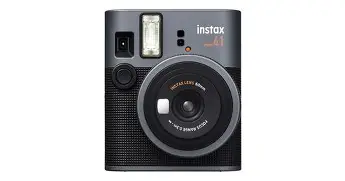
The Fujifilm Instax Mini 41 is a consumer-oriented instant camera that produces small, credit-card sized prints on Fujifilm’s Instax Mini film. It embraces the analog charm of immediate physical photos and is targeted at social users, travelers, party-goers, and anyone who values tangible memories. Unlike digital cameras, the Instax is about the process as much as the result: framing a moment, pressing the shutter, and handing over a fresh print.
Optical and Operational Characteristics
Instant cameras generally offer a simple, fixed-focus lens with a limited set of user controls—often automatic exposure complemented by a flash for indoor use. The Instax experience emphasizes ease and immediacy rather than pixel-level image control. Cameras in this family may include features geared toward selfies and close-ups as well as a compact, retro-styled build that’s comfortable to carry and operate.
Real-world Use Cases
This camera shines at celebrations, in cafés, on travel days when the memory of a place is better captured as a physical memento, and at any social gathering where instant prints become keepsakes. Photographers and creatives also use instant cameras as a tool for analog planning, contact-sheet-style reference, or to create mixed-media art. Prospective buyers include people looking for a fun gift, families documenting events, and hobbyists building a tangible scrapbook.
Discover deals on Cameras & Photography — updated daily.
View Offers →Practical Considerations Buyers Care About
- Print Size and Cost: The smaller print size limits cropping and detail but makes each print affordable in terms of paper and handling—buyers should tally ongoing film costs.
- Film Availability: Instax film is widely available in many markets, but buyers weigh long-term access and the cost per shot.
- Simplicity vs Control: Instant cameras trade manual control for ease of use; buyers who desire granular exposure or focus control may find these cameras limiting.
- Battery and Consumables: The camera’s battery life and the film cartridge format are practical factors for travel or extended use.
- Creative Output: Buyers often value the distinctive grain, tone, and color rendition of instant film as a creative choice rather than a technical limitation.
Pros & Cons
- Pros:
- Immediate, tangible prints make memories shareable on the spot.
- Extremely simple to use—ideal for beginners and casual shooters.
- Compact and portable; suitable for parties, travel, and gifts.
- Fun, creative aesthetic that can’t be replicated by digital cropping alone.
- Cons:
- Ongoing cost per shot (film) adds up for frequent use.
- Limited exposure and focus control compared to digital cameras.
- Small print size reduces detail and cropping flexibility.
Side-by-Side Comparison
| Feature | Sony Fe 50 150Mm F2 Gm | Fujifilm Instax Mini 41 |
|---|---|---|
| Product Type | Professional telephoto zoom lens for mirrorless bodies | Compact instant film camera |
| Primary Use | Sports, events, portraits, low-light photography | Social events, travel mementos, creative instant prints |
| Image Output | High-resolution digital images with shallow depth of field | Physical Instax Mini prints, distinctive analog look |
| Control & Flexibility | Extensive when attached to compatible bodies (AF, exposure, focal length) | Minimal—automatic exposure and fixed focus with some modes |
| Portability | Heavier and larger; better in a dedicated kit | Very portable; designed for casual carry |
| Ongoing Costs | Minimal consumables beyond maintenance and occasional filters | Significant—film packs are a recurring expense |
| Learning Curve | Steeper for mastering AF systems and creative use | Very shallow; immediate results |
| Best For | Professional and enthusiast photographers focused on image quality | Casual users, party/event-goers, analog enthusiasts |
Buying Guide: How to Decide
Choosing between a professional telephoto zoom lens and an instant film camera is not strictly a technical decision—it’s about intended use and long-term satisfaction. The following guide helps clarify priorities and match them to the right tool.
1. Define the Primary Purpose
If the goal is to deliver high-resolution images for clients, editorial work, or prints with controlled background separation, a professional-grade telephoto zoom is the appropriate investment. If the intention is to create immediate physical keepsakes, capture the spirit of social events, or make playful, shareable mementos, an instant camera is the better match.
2. Assess the Budget—Initial and Ongoing
Large-aperture professional lenses represent a significant up-front expense but tend to be a one-time investment with low per-shot cost. Instant cameras are relatively affordable to buy but have ongoing per-shot costs for film. Buyers should calculate expected usage: frequent social shooting can make film costs substantial, while a lens purchased for commercial use may pay for itself through assignments.
3. Consider Portability and Workflow
Professionals who travel between venues may want to consider weight and the effect on overall workflow—how much gear will be carried, whether support (monopod/tripod) is practical, and how quickly subjects must be tracked and captured. Instax cameras add negligible bulk and integrate easily into social settings without technical overhead.
4. Think About Creative Goals
For photographers seeking technical mastery—bokeh control, selective focus, high-ISO performance—the telephoto lens provides a wider creative palette. For those seeking nostalgia, spontaneity, or tactile output, an instant camera offers an aesthetic choice that digital images alone cannot substitute.
5. Try Before Buying
When possible, testing gear in realistic conditions is invaluable. Renting the lens for a handful of shoots reveals handling characteristics and whether the optical behavior matches expectations. Borrowing or sampling an instant camera and a pack of film for an event clarifies how prints will integrate into social routines and whether the image style is appealing.
Discover deals on Cameras & Photography — updated daily.
Shop Amazon →6. Factor in Future-Proofing and Resale
High-quality lenses from reputable lines often retain value and are transferable across many bodies within the same mount. Instant cameras are subject to design cycles and the vagaries of film pricing and availability. Buyers who consider resale value may favor the lens, while those who prioritize ephemeral experiences may prefer the instant camera despite lower long-term value retention.
7. Accessories and Support
For the telephoto lens, consider filters, lens collars, protective cases, and service plans. For instant cameras, stock up on film, protective sleeves for prints, and a compact carrying case. Both choices benefit from a plan for maintenance and storage suited to their nature—optics vs consumables.
Real-World Scenarios — Which One Makes Sense?
To make the decision concrete, consider a few typical buyer profiles:
- Wedding Photographer: The lens is compelling for ceremony and portrait coverage where low light and subject isolation are critical. The instant camera can still be a delightful secondary novelty—used at a guest table for instant guestbook prints.
- Traveler or Tourist: If the priority is compactness and souvenirs, the Instax delivers a low-effort way to take home physical memories. The lens is less relevant unless the traveler is shooting professionally or seeking high-quality travel portraits and distant landscapes.
- Event Organizer or Party Host: The instant camera becomes an interactive element for guests, providing immediate keepsakes. The lens’s benefits are more aligned with hired professional coverage.
- Sports or Wildlife Enthusiast: The telephoto lens is designed to capture action at a distance; the instant camera is not suitable for these scenarios.
- Social Media Creator: Digital output favors the lens paired with a high-resolution body, but instant prints can serve as tangible props or content variation for storytelling.
Conclusion
Ultimately, the choice between the Sony Fe 50 150Mm F2 Gm and the Fujifilm Instax Mini 41 comes down to intent. The Sony telephoto zoom is a tool for photographers who need optical control, low-light capability, and professional-grade results. It answers technical and commercial demands and becomes an investment in photographic versatility. The Fujifilm Instax Mini 41 embodies immediacy, simplicity, and the joy of physical prints—attributes that cater to social sharing, personal memories, and a tactile creative practice.
One is not categorically better than the other; they succeed at very different tasks. For those building a professional kit or prioritizing image quality and control, the telephoto lens is the logical choice. For those who prize fun, accessibility, and instant output, the instant camera is the clear winner. Many buyers discover that these two products can coexist in a larger creative toolkit—using the lens for assignments and the instant camera to capture moments that benefit from a physical, shareable print. The practical advice is to match the tool to the task and to consider not only purchase price but also the workflow, ongoing costs, and the emotional value of the images each creates.