Hp Omnibook X Flip 14 Review: Real User Experience After 3 Months
I've been using the HP Omnibook X Flip 14 as my daily driver for the past three months. I bought it to replace an older ultraportable that was starting to show its age, and I wanted something that could handle light creative work, video streaming, and a fair bit of multitasking while also being comfortable to use on the couch and on short trips. In this review I’ll share what I found after weeks of real-world use: the things I loved, the things that frustrated me, and whether I think it’s worth buying depending on what you need.
Quick overview of the unit I tested
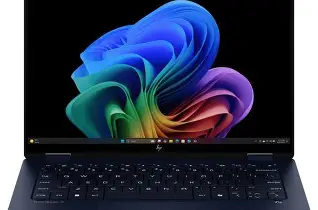
For transparency: the laptop I purchased and tested is the 14-inch HP Omnibook X Flip configuration with a 1080p touch display, Intel Core i5 processor, 16GB of RAM, a 512GB NVMe SSD, and an integrated GPU. It came with a backlit keyboard, a fingerprint reader integrated into the power button, and a 360-degree hinge that turns it into a tablet.
Design and build: lightweight without feeling cheap
Right out of the box I was impressed by how light the Omnibook X Flip 14 feels. It’s noticeably lighter than some of the thicker 14-inch machines I’ve carried in the past, and that makes a difference when I toss it into a tote or use it on the go. The chassis is mostly plastic with a soft-touch finish on the lid and palm rest; it doesn’t scream premium, but the finish hides fingerprints well and gives a pleasant tactile feel.
The hinge deserves a special mention. The 360-degree mechanism is smooth and firm enough that the screen stays in place across all modes—laptop, tent, stand, and tablet. I use the tent mode a lot for watching shows in bed, and the hinge kept the display stable without wobbling. That said, when I repeatedly switch between modes, I notice a faint creak around the hinge area—nothing structural, but something I would have preferred absent on a new device.
Display: great for daytime use, not the best for color-critical work
The 14-inch 1080p touch panel is one of the features I appreciated most. It’s bright enough for working in a living room with east-facing windows, and the anti-glare coating helps reduce reflections when I’m outside on a cloudy day. The multitouch responsiveness is solid—scrolling and pinch-to-zoom feel natural whether I’m using my fingers or a capacitive stylus.
If you do photo editing or video grading, be aware that the panel leans a little toward cooler tones out of the box. In my experience, an external calibrated monitor or a color profile adjustment is necessary for precise color work. For general creative editing, streaming, and browsing, the display is comfortable and sharp.
Performance and daily experience
With the Core i5 and 16GB RAM, the Omnibook handles everyday tasks smoothly. I routinely have 10–12 browser tabs open (mix of Slack, email, Google Docs, a few research pages), a light video-editing timeline in the background, and music streaming—it rarely stutters. Boot and wake times are quick thanks to the NVMe SSD; I can be up and working within 10–15 seconds of opening the lid.
Under sustained heavy load—exporting a 10-minute 1080p timeline or running CPU-bound benchmarks—the fans do kick in noticeably. I was surprised by how quickly the cooling system ramps up; the chassis remains warm but not uncomfortably hot on my lap. The trade-off is audible fan noise that’s louder than ultrabooks I’ve used that prioritize silence. For me, that’s fine while I’m working at a desk, but it’s something to keep in mind if you need near-silent operation in quiet places.
Find top-rated Laptops & Computers products at great prices.
Browse Now →Battery life: solid, but depends heavily on use
I measured battery life in my normal workflow rather than synthetic tests. With screen brightness around 40–50%, light web browsing, document editing, and occasional video calls, I got between 8–10 hours per charge—usually enough to get me through a full workday. When I pushed the machine with video streaming in the background and a prolonged editing export, battery life dropped into the 4–6 hour range.
Charging is via USB-C and the included charger tops the battery back up fairly quickly. I appreciated that I could use a third-party USB-C charger for topping up between meetings, but I did notice that heavy-use charging (while exporting video and charging at the same time) generates more heat than I expected.
Keyboard and trackpad: comfortable, with a few caveats
Typing on the Omnibook’s keyboard is one of the highlights. The key travel is good for a thin laptop, with a springy, responsive feel that made long writing sessions comfortable. The backlight is even and useful for late-night work. The key layout is mostly conventional, though the power/fingerprint button placed near the top-right did catch me out a couple of times when I meant to press Delete.
The trackpad is large and smooth—my gestures (three-finger swipe, two-finger scroll) registered accurately and the palm rejection was reliable. I did notice occasional cursor jumps when I rested my thumb near the pad during heavy typing, but that stopped after a quick settings adjustment to increase palm rejection sensitivity.
Speakers, webcam, and microphones
The speaker setup surprised me: it gets reasonably loud and the low end is fuller than I expected for a slim 14-inch. It’s great for podcasts and casual video watching, but it lacks the deep bass and clarity you’d get from a dedicated external speaker. The webcam is serviceable for video calls in well-lit rooms, but in low light the image gets noisy and flat. The built-in microphones do a good job picking up my voice in typical home office conditions, though I still prefer a headset or external mic for recording.
Ports and connectivity
The Omnibook includes a decent selection of ports for a compact machine: two USB-C ports (one for charging), a full-size USB-A, a microSD slot, and a headphone jack. I missed having a full-size HDMI port on a couple of business trips where I had to present on projectors—an inexpensive dongle solved it, but it's an extra accessory to carry. Wi‑Fi and Bluetooth have been stable in my experience; I rarely dropped connections and transfers across my local network were smooth.
Durability and real-world wear after three months
After three months in regular rotation—commuting on public transit, working at cafés, and day-to-day use—I’ve noticed only minor cosmetic wear. There are faint scuffs on the underside and the finish on the palm rest has a slightly shinier patch from where I rest my hands. Performance and battery capacity remain consistent with day-one behavior; I haven’t noticed any battery sag or increased fan noise beyond my earlier notes.
Pros & Cons
- Pros: Lightweight and portable; comfortable keyboard; responsive touch display; solid battery life for typical office and browsing tasks; smooth 360° hinge; good value for the feature set I purchased.
- Cons: Fan noise under sustained load; display not ideal for color-critical work without calibration; webcam performance in low light; no full-size HDMI port; slight creak from hinge when switching modes repeatedly.
Comparison: How it stacks up against similar 14-inch 2-in-1s
| Model | CPU (typical) | RAM | Storage | Battery in my use | Weight |
|---|---|---|---|---|---|
| HP Omnibook X Flip 14 (my unit) | Intel Core i5 | 16GB | 512GB NVMe | 8–10 hours (light use) | Very light (easy to carry) |
| Dell Inspiron 14 2-in-1 | Intel Core i5 / Ryzen 5 | 8–16GB | 256–512GB | 7–9 hours (light use) | Comparable |
| Lenovo Yoga 7i / 9i (14-inch) | Intel Core i5/i7 | 8–16GB | 256–1TB | 8–11 hours (light use) | Slightly heavier, more premium build |
This table reflects my subjective comparison based on handling, battery feel during use, and typical configurations. The Omnibook competes well on portability and value, while some competitors edge it out on premium build or silent cooling.
Find top-rated Laptops & Computers products at great prices.
Shop Amazon →Who should buy the HP Omnibook X Flip 14?
In my experience, the Omnibook X Flip 14 is a strong fit if you want a lightweight, convertible laptop for everyday productivity, streaming, and light content creation. I recommend it for students, remote workers who move between rooms or cafés, and anyone who values a responsive touch display with reliable battery life.
If you do heavy video editing, game heavily, or rely on extremely accurate color reproduction, I’d suggest looking at more powerful models with discrete GPUs or higher-end color panels. Similarly, if near-silent operation in libraries or meetings is critical, consider devices advertised specifically for quiet cooling.
Buying guide: what to look for and what I would change
If you're considering buying one, here are the things I would check and the configuration choices I'd make based on my three months of experience:
- Pick at least 16GB of RAM if you plan to keep this laptop for several years. My 16GB configuration has kept multitasking smooth and felt more future-proof than the 8GB options.
- Prefer the NVMe SSD — loading apps and waking the laptop is noticeably faster than SATA drives. If you handle large media files, opt for 512GB or above.
- Test the hinge in store before buying if you can. Make sure it feels firm and smooth; any abnormal looseness or aggressive resistance is worth noting.
- Check the keyboard layout — small differences in the power button placement or key sizes can create annoyance, as I found with the power button being close to Delete.
- Bring headphones or an HDMI adapter if you frequently present—there's a chance you'll need a dongle for projectors and meeting rooms.
- Consider a USB-C dock for a desk setup—this made my life easier when I wanted external displays and a wired LAN connection.
- Warranty and extended support — if you travel with your laptop, check the warranty terms. I added an extended plan because I rely on this machine daily and the peace of mind was worth the cost for me.
Real annoyances and small wins (the things that matter day-to-day)
Some little things became obvious only after weeks of use. The fingerprint reader built into the power button is a small win—I appreciate one-touch sign-in on a busy morning. The tent mode is great for watching shows in bed. On the flip side, the louder-than-expected fan noise during occasional CPU-heavy tasks and the webcam’s poor low-light performance were recurring annoyances. Also, I wish HP had included a full-size HDMI port; carrying a dongle is an inconvenient extra.
Final thoughts and conclusion
After three months with the HP Omnibook X Flip 14, I can say this: it did exactly what I bought it for. It’s light enough to carry all day, comfortable enough to type long emails and drafts, and flexible enough to switch to tablet mode for quick sketchnotes or watching a show. Its strengths are portability, a pleasant keyboard, and a usable touchscreen. The trade-offs are louder fans under load, a display that benefits from calibration for color work, and a webcam that could be better in dim rooms.
If you want a reliable, affordable 2-in-1 that covers the broad majority of day-to-day computing tasks without fuss, this is a very competent option. If your priorities are silent operation, top-tier display color accuracy, or heavy GPU horsepower, you’ll want to look at higher-end or specialist models. For my workflow—writing, browsing, light editing, and occasional presentations—the Omnibook has been a dependable companion, and I expect it to remain my go-to machine for the foreseeable future.