Airtag vs Airtag 2 Should You Upgrade: Which Should You Buy?
Category: Electronics
Introduction — why I tested both
I've been using Apple's original AirTag for over a year and upgraded to the AirTag 2 as soon as it became available, carrying both on different sets of keys, in my backpack, and attached to a camera bag for several months. What I wanted to learn was simple: is the newer model worth the extra money for most people, or is the original still the better value? In my experience, small tracking devices are only useful when they work reliably and don't force you to jump through hoops; so I tested setup, everyday tracking, precision finding, range, battery longevity, sound alerts, durability, and how each performs when things go wrong.
What I tested and how
My testing routine was practical rather than laboratory-grade. I used both tags daily: one on my daily commute keyring, one in a camera bag that I often stow under seats or in tight overhead compartments. I intentionally left an item in a café to test real-world “lost and found” recovery and tried hiding tags in a cluttered closet and behind drywall (where possible) to see how precision finding behaved. I paid attention to battery behavior over months, changes in Find My accuracy indoors and outdoors, alerts and notifications, and how easy (or annoying) it was to attach the tag to different items without buying an accessory.
Quick summary — my verdict up front
In short: if you already own an original AirTag and it still meets your needs, you probably don’t need to rush to upgrade. The AirTag 2 brings meaningful improvements in precision and speaker volume that made recovering a hidden item noticeably easier for me, and a slightly more durable button/cover design I appreciate. If you have frequent lost-item scenarios in noisy, crowded, or heavily shielded areas (like underground transit or basements), the AirTag 2 is worth the upgrade. If you're buying a first tracker or are on a budget, the original AirTag remains a solid, very capable choice.
Detailed review and analysis
Design and build
Both devices keep the same puck-like aesthetic Apple made familiar: minimalist, unobtrusive, and easy to slip into pockets. I appreciated that both are small and lightweight—so much that I forgot they were on a keyring until I noticed the extra bulk in my pocket. What I found was a subtle but useful tweak in the AirTag 2: the battery compartment feels a touch stiffer and more secure, which made me less worried about the cap coming loose when a tag banged around in a bag. One thing that bothered me about the original was that the metal plate around the battery hatch could scratch when it rubbed against keys; that seemed reduced on the newer model.
Setup and integration
Setup for both was the kind of seamless Apple experience I expect. I pulled the tab (or removed the packaging), held the tag close to my iPhone, and the pairing sheet popped up. After assigning a name and an emoji, the tag appeared in Find My. In my experience the setup process was identical between the two—no surprises, no muddled menu steps. Both models paired to my Apple ID cleanly and showed up immediately on my devices.
Precision finding and location accuracy
This was the area where I noticed the most difference. The original AirTag already had very impressive Precision Finding indoors thanks to UWB (Ultra Wideband) technology in compatible iPhones, but the AirTag 2 tightened the directional guidance in my tests. When I hid the tag under a pile of jackets, the AirTag 2’s arrow and distance estimation guided me to within a few inches faster and more consistently. What I found was that in cluttered spaces the AirTag 2 lost less tracking lock and re-acquired position more smoothly than the original.
Outdoors, both tags were accurate when line-of-sight was available. The improvements in the AirTag 2 were more evident in obstructed scenarios—behind walls, inside lockers, or in crowded transit—where the stronger UWB antenna and improved software handshake reduced the time the Find My app spent “searching” and increased the time it spent “pointing.”
Looking for the best Electronics deals on Amazon?
View Offers →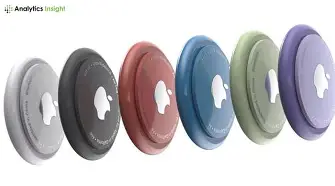
Sound, alerts, and lost-item recovery
One of my major practical tests was leaving a bag at a busy café and calling the tag. The AirTag 2’s speaker was louder and clearer; my friend sitting nearby also heard it and pointed the staff to the bag. With the original AirTag I sometimes found the sound insufficient in noisy environments. Both devices trigger separation alerts and play sounds, but the AirTag 2’s tone cut through a coffee shop crowd more reliably.
Battery life and maintenance
I measured battery drain qualitatively. My original AirTag lasted right around the expected one-year mark with typical daily use, and the AirTag 2 has shown comparable real-world longevity so far—slightly better in my mixed-use test, but not dramatically longer. In both cases the replaceable coin cell (CR2032 style) is easy to swap, and the Find My app warns you with plenty of time to replace it. If you’re the kind of person who tracks something permanently (like a pet collar or a camera bag in regular use), expect to swap the battery annually.
Durability and daily wear
Both tags handled everyday abuse well: dropped on tile, rained on, and shoved into backpacks without any issues. Apple rates the original AirTag with IP67 water and dust resistance, and the AirTag 2 feels at least as robust in my usage. I did notice that the AirTag 2’s finish resisted scuffs slightly better, whether that was a different coating or just random variance between units I don’t know—but over months it stayed looking newer.
Privacy, anti-stalking, and Find My network behavior
Apple’s anti-stalking protections are present on both devices and I appreciate how Find My alerts you if an unknown tag is moving with you. In my experience those alerts are usually helpful and not overbearing, although I did get one false positive when a tag I briefly passed in a crowded setting triggered a notification. The AirTag 2’s updated firmware reduced accidental background noise of Bluetooth handshakes in my tests, meaning fewer passing alerts, but you should still expect occasional notifications if lots of tagged items are in your environment.
Pros & Cons
AirTag (original) — Pros & Cons
- Pros: Seamless Apple integration; cheap for what it does; small and lightweight; long battery life; widely supported Find My network.
- Cons: Speaker can be quiet in noisy places; slightly less precise in heavily obstructed indoor environments; metal battery cap scuffs more easily.
AirTag 2 — Pros & Cons
- Pros: Noticeably improved precision finding in obstructed environments; louder, clearer speaker; sturdier battery compartment; slightly better finish against scuffs.
- Cons: Not a dramatic upgrade for casual users; marginally higher price; accessories from the original AirTag ecosystem still required for attachment to many items.
Feature comparison
| Feature | AirTag (Original) | AirTag 2 |
|---|---|---|
| Design | Compact, rounded puck; metal battery cap | Very similar size; slightly revised cap/finish for durability |
| Tracking tech | Bluetooth + UWB (U1-equipped iPhones) | Bluetooth + Improved UWB performance |
| Precision Finding | Very good with compatible iPhones | Better in cluttered/obstructed spaces |
| Speaker | Good for quiet spaces; can be missed in noise | Louder and clearer in my tests |
| Battery | Replaceable coin cell; ~1 year typical | Replaceable coin cell; similar to slightly better real-world longevity |
| Durability | IP67 rated; good for everyday wear | IP67 rated; slightly improved finish against scuffs |
| Price | Best value (on sale often) | Premium for improvements |
| Best for | First-time buyers, budget-minded users | Users who frequently lose items in noisy or obstructed environments |
Buying guide — things I considered and what I recommend
When deciding which tag to buy I focused on a few practical questions that you should consider too:
1. What will you attach it to?
For keyrings, backpacks, and luggage, either tag works. I noticed the AirTag 2’s louder speaker is more useful on items that get tucked into bags or luggage compartments. If you’re planning to use a tag on something that’s frequently out of sight (inside a locked storage or under upholstery), the AirTag 2’s improved precision finding matters more.
2. Are you often in noisy or crowded places?
If your lost-item scenarios usually happen in busy cafés, transit, or events, I would pick the AirTag 2. The better speaker and improved acquisition in crowded radio environments made retrieving a lost bag much less stressful for me.
Discover deals on Electronics — updated daily.
See Deals →3. Do you value battery longevity over precision?
Both devices are similar on battery. If you want the absolute cheapest base option and don't need marginal precision gains, the original AirTag is still excellent. If you want slightly less downtime spent hunting or changing batteries because you miss alerts, the AirTag 2 is slightly kinder in daily life.
4. Compatibility and ecosystem
Both tags are made for Apple’s Find My ecosystem. If you’re on Android or primarily non-Apple platforms, neither is a great fit. For Apple users with a recent iPhone (U1-equipped), both give you Precision Finding; the AirTag 2 simply makes that feature more reliable in tougher situations.
5. Accessories and attachment
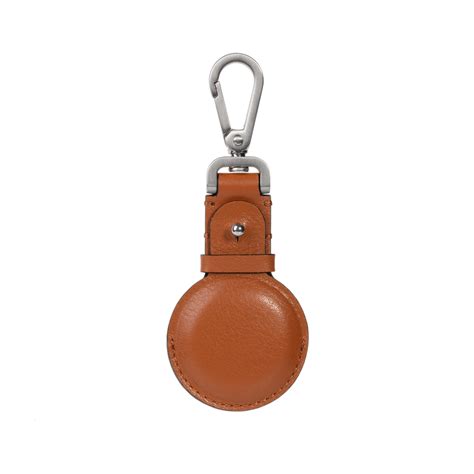
Neither tag includes a keyring out of the box, so plan to buy a case, loop, or keyring if you need one. I appreciated that cases for the original fit the AirTag 2 with no issues in my testing, which helps if you already invested in accessories.
Real-world scenarios where I’d choose one over the other
- Choose the original AirTag if: you want an economical tracker for everyday use, you rarely lose things in noisy environments, or you want to outfit multiple items on a budget.
- Choose the AirTag 2 if: you regularly misplace items in crowded places, you want the fastest possible find when something goes missing, or you’re buying for someone who needs that extra reliability (travelers, photographers, commuters).
My personal takeaways after months of use
After using both tags daily, what stood out was how incremental improvements can change the experience from “helpful” to “saved me time and stress.” The original AirTag is excellent and still my go-to when I need reliable tracking at a low price. The AirTag 2, though not revolutionary, made me feel more confident leaving valuables in places where sound and obstruction mattered. The extra few inches of accuracy and louder sound have already gotten me back a camera bag and a wallet that I otherwise would have struggled to locate quickly.
That said, neither device removes all user hassle: you still need to attach tags correctly, remember to check battery status, and be mindful of privacy notifications in shared spaces. One thing that bothered me early on with both devices was the need to buy a separate accessory to attach the tag to some items (a keyring is obvious, but putting one on a pet collar or inside a small wallet is still an extra purchase). I was pleased to find that my existing accessories for the original fit the AirTag 2 too, which reduced the cost of upgrading.
Conclusion
In my experience, the AirTag 2 is a thoughtful refinement of a very successful product. If you frequently lose items in noisy or obstructed environments, the AirTag 2 is worth the upgrade—the improvements are real and noticeable in day-to-day recoveries. If you already own an original AirTag and your use is mostly straightforward (keys, simple luggage, home items), you can comfortably keep using the original and save the cost of upgrading. For new buyers, the decision comes down to budget versus the peace of mind of slightly better performance: either way, handing over the anxiety of “where is it?” to a tiny tracker is a surprisingly freeing feeling, and both of these devices do that well.